
Take What You Need
by Kate Bird
She shows up one day, just like that, her nails painted orange peel. She sits in the back of each classroom and puts her feet on the lower rung of the chair in front of her and dips her orange peel nails in and out of her mouth. She doesn’t say anything.
This is only what Sam has told me.
Sam also says: She’s big.
How big, I ask.
Sam shrugs and loses her eyes in the TV, which is playing Nickelodeon. I’m at Sam’s house, and we’re making banana cream pie, but we don’t have enough bananas. I beat and beat the cream against the side of the bowl, waiting for it to suddenly bloom into stiff mountains.
How big, I ask, again.
Sam spreads her hands.
Like big enough to break a chair? I ask.
Sam shrugs again, and the cream comes away from the blender tips in soft white towers. Later, the pie will emerge from the oven covered in a waxy shell that turns into shards in our mouths. I don’t swallow them. I spit them into a napkin instead. I’m afraid they’ll slice open my throat from the inside.
The teachers love Delilah. Not because of anything she says – she’s silent as a planet glowing the sky. It’s what she writes, how she does her homework. Her handwriting is neat as an ant trail, her numbers hard and dark.
They say that Delilah comes from a faraway place. Like New York but not New York. She may even be from another country. There are a lot of guesses. Alabama. Maine. Iceland.
But none of these seem quite right.
For one thing, Delilah floats when she walks. She just hovers along, her footsteps barely making her skin shake.
She also is so soft you can put your hand through her. You don’t get like that growing up in the drawn-out heat of Alabama, or Iceland, where the cold turns your insides to metal, pulls you heavily down.
I don’t know if I believe that last one. Nobody’s a cloud. You can’t survive without substance. When I broke my arm in third grade, I thought I’d died. I couldn’t believe it when the doctor made a clean slice through the top of my cast and it cracked open against my real, living skin.
The boys get a lot of fun out of the notion of Delilah being cloud-like. You know, anything about putting your hand in or through something. I’ll be walking down the halls and I’ll hear them whispering about that. I’ll see their mouths forming wet and quick over the word through.
I think about this when Sam and I are fooling around.
It started the same day we made banana cream pie. We’d just put it in the oven, were staring at its surface through the oven window, as if blam, it would happen then, turn into something more solid, and Sam reached for me, managed to slide her index finger right through me, like moving her hand out and back into my heart.
After, she washed her hands and scrubbed at her nails with the vegetable brush that always sat by the faucet. She opened the oven and heat flew against our faces.
What do you think? she murmured.
I took a look.
It’s still too white, I said.
So we waited, but we waited too long. Sam cut two lopsided slices anyways after we pulled it out, and we sat on the linoleum with the plates balanced on our knees and edged forks into the daisy parts of the cream. I watched white line Sam’s lips, but that was about as far as we got.
We threw the rest of the pie out back into the can, like someone’s bad night, and neither of us laughed.
I hope the bears don’t get it, Sam said.
She eyed the alley darkly. She stuffed her hands into her pockets and went inside.
Delilah enters as a junior halfway through the year, so she has to play catchup, but it doesn’t seem to be a problem for her. Except for gym class. She switches to weight training on the second day. Delilah may float, but she can’t run, and even clouds need to fulfill graduation requirements.
The weights gym is a small, rubbery room to the right of the track. On good days the sun fills it like a vase and makes everyone squint at the mirrors. On bad days the clouds stick low to the valley and the weights feel heavier. They say it’s always a bad day for Delilah in the weight room. They also say it’s always a good day. I don’t know who to believe.
I try to picture Delilah in silky gym shorts and a huge sports bra. I wonder if her pale cheeks go blueberry red when she sweats, if her yellow hair plasters to her scalp, like a swimming pool tarp. I wonder what her breath sounds like when it pushes out of her, as her muscles tense.
I practice, alone in my room, at night. I stand in front of the mirror with a couple of cans of beans taken from the lazy susan and hunch my body into squats. I suck in my breath and shove it back out, until my cheeks and collarbones flush. I close my eyes. I get dizzy. I have to lie back on the carpet after, and sometimes fall asleep there, the tufts pushing marks into the skin at my back.
It’s spring, so everything is running. The streets, the river, only some of the kids at school. Sam takes the colorful ads from the middle of that week’s newspaper and makes little sailboats and tries to float them in the culverts.
Once, we find a lone duckling paddling its rubber feet up a sluice, its beak going mad against the current.
Sam reaches straight in and snatches it out and she holds it against her taut belly. It kicks and kicks and shits in her hands so she yelps and sends it on its way. She wipes her fingers on her shirt, below her tits that don’t really exist, and smiles and says, Didn’t want to be touched.
I lose sight of the duckling. The culvert is wide and running, so it’s easy to do.
Sam throws a rock at one of the sailboats and it careens into a wedge of cattails. She throws another and it sinks, a slow process that makes me think of an animal dying.
Stop, I say. I watch her fingers pause around the new rock she’s found.
You’re such a little girl, she says, and she turns and marches up the lawn, grass sticking to her heels, the rock falling from her hand with a soft plop.
There’s a school assembly and I crane my neck to find Delilah in the bleachers. But I’m sitting in the second row, with the other freshmen. Above us, the upperclassmen lean into each other in a giant wave.
The fish-eyed principal stands with a microphone on the shiny gym floor and clears his throat into it. The school nurse waves some papers up at him from where she’s sitting in the first row, and he says, It’s time to talk about nutrition.
There’s a powerpoint presentation. The gym lights lower and pictures of glossy pizza and bags of Fritos swim around in front of us. Apples the size of our school mascot, kale and chard like the hedges in front of the nice houses on Second.
Sam pokes me. Her index finger marches down the right crease of my jeans, finds my pocket in the dark. I jerk my knees, keep my eyes on the pyramid of healthy fats and grains, the golden globules and sheaves of wheat.
I can hear it: the wave murmuring. It grows to a low buzz, makes the principal speak louder and faster into the mic.
I crane my neck again, but maybe Delilah is out sick for the day, or hiding. I feel Sam’s finger hook deeper, arcing left. It stays there until the presentation is over, and then the lights come on, and Sam pulls her hand back to put her palms together and clap. Everyone stands up so quickly to get out of there that I lose track of my search. Even Sam pretends she doesn’t know me. Just stands and clambers down the bleachers, along with everyone else, leaving me behind.
This is how Delilah eats: delicately. She uses a tiny spoon to make everything last longer. Like ice cream. It’s better in teaspoon doses.
She swirls her thick tongue into the silver divot until she can taste the metal. Then she dips the spoon in again.
This is also how Delilah eats: in waves of heat and color. She opens her mouth wider and throws it all in. She treats her teeth like a vice. She lets her saliva run and run. She keeps her eyes open and huffs in between, almost groaning from the flavor. She likes to feel her belly push out against the edge of her jeans. She leans back at the end and puts her heels up and doesn’t wipe her lips because she wants to make it all last as long as she possibly can.
The next week, I get my period so bad that I spend all of lunch in the bathroom, compressed into an S on the stall floor. I see the tips of Sam’s shoes under the door, and then her sideways face.
Let me in, she commands.
At first she just sits across from me, mirroring my position. The bell for the end of lunch shakes through the walls, followed by the one for fifth. The rumble of feet in the halls slows to a trickle, then a scattered pace here and there. The school goes awash in the silence of closed classroom doors.
Sam moves so that our ribs press together.
How bad is it, she asks.
I shake my head. She takes my hand. I close my eyes and see swimming light, swirled like the top of the banana cream pie. My eyes ache but I force myself not to cry in front of Sam.
Put your head on my shoulder, she whispers, and I do, and it’s nice, time widening out, Sam rubbing circles into my kneecap.
Stand up, she says, and I moan a little, and she says, I promise it will help. The tile, the color of smashed meat, sweats against my back, and I can tell it’s raining because the light coming through the block glass window is a creamy green.
Sam unzips my pants and works the waistband down.
Sam, I say, aware of the pad between my legs, hideous as an extra limb, but she shushes me, slaps my hand away, and I keep my eyes on the ceiling. The crisp pad edges scrape the insides of my thighs as they slide down. The bathroom stall floods with the smell of me, and my neck goes hot, and I glance down for a second and Sam’s eyes are the color of nickels beaten into the road.
Close your eyes, she instructs, and I do. I keep them closed for as long as it takes, even after, until I hear the click of the bathroom lock, the quick burst of the faucet, and the scraping of a fistful of paper towels against Sam’s mouth and hands. The bathroom door whumps open and shut, and then it’s just the sound of my heart kicking at every external point on my body, as if I’m a star.
Delilah is from the Bible. That’s what everyone says, but Dad never took me to church, and he’s not about to now, he says. So when I ask him for a copy of the Bible, he looks at me like I’ve really lost it.
Bet the library has one, he laughs. He rubs my head. He asks: You OK, Tessy?
I ride my bike to the library on a Saturday and ask for a King James. The librarian doesn’t look at me funny, just pulls a black covered book out from under the front desk and hands it to me.
Keep it as long as you like, she says.
I go to a table by a window and open to the first page and realize I have no idea where to find the story I’m looking for. I thumb through the book for a while. A couple of the tissue pages tear. After a few minutes, I give up, go back to the librarian.
I ask: Do you have anything on Delilah? From this.
I tap the grainy cover.
The librarian hums, takes me to a rack of DVDs. She swirls the creaking towers around until she plucks out one with a drawing of a woman too beautiful to be real on the cover.
You get this for fourteen days, she says. She circles the due date on the checkout receipt. At home, on my bedroom carpet, I study the DVD cover. The woman is so narrow she could turn left and be forgotten. She has eyelids like cut orange slices. She wears ribbons of gold. She leans, full-bodied, against a man’s glossy torso, his muscles the exact color of the banana cream pie Sam and I threw into the alley.
They say there’s no way Delilah has it good at home. They say that the bigger you are, the bigger your problems. They say Delilah got called into the principal’s office last week, on the school nurse’s suspicion, and then Delilah didn’t show up at school for two whole days.
I roll the word suspicion around in my mouth. I imagine the school nurse rolling her tongue around the sour suspicion in her mouth, writing Delilah’s name on confidential papers and waving them at the fish-eyed principal, then the fish-eyed principal waving Delilah into his office.
I imagine Delilah sitting on the plastic chair reserved for students in trouble, her fingers knitting in her lap. Delilah doesn’t cry, because if she did, she’d lose all that saltwater and her ability to float.
She listens to the principal’s words carefully. He asks her how she’s doing. She nods a teeny bit and the rest of her body quivers with that singular motion. Delilah stares at a paperweight on the principal’s desk, a half-glass with words written on it in a spiral. She can’t read them from here. She imagines that the words are living records of what the principal is saying, snatching the syllables out of his mouth and stowing them inside.
How is your health, the principal says. How are things at home.
I don’t know how Delilah answers these questions. Maybe she doesn’t. If there’s one thing everyone agrees about, it’s that Delilah doesn’t say very much at all.
Sam shows up on my front porch on a night that Dad has the TV going. His hand rests next to an emptying glass of scotch, and he doesn’t notice when Sam kicks her way in, asks for some ice cream, eats all three Ben and Jerry’s scoops right there in front of me, sticks the spoon in the drain hole with a tiny clap.
I look nervously at Dad, but his eyes are fixed on the latest round of Survivor.
Sam washes her hands, scrubbing under the nails, and rinses her mouth.
Let’s go upstairs, she says.
In my room, the lava lamp sends floating neon ghosts over my broken stereo, the tennis shoes lying everywhere with their tongues out. Sam tries to play a CD.
It doesn’t work, I say, for the millionth time.
Well, fuck that. She smacks the machine, then does a tour of my room, pointing out everything that’s broken, even things that aren’t: my bookshelf, the calendar on the wall, the fuzzy Dollar Store pen. She takes this in her fist.
Don’t break that, I say.
Don’t break that, she mimics. Sam lifts my shirt up to the bottom of my sports bra. She drags the feathery end of the pen over my navel, then flips it around and writes her name on my stomach. The pen tip scratches a bit and I flinch. She pushes me backward on the bed until the frame creaks. I can feel the anger in her, pulsing in her wrists, souring her breath. I can also feel when it leaves her, like a boa constrictor losing its skin.
Sam lies on my carpet after and looks up at the ceiling. I feel Delilah’s name on my tongue, even though the last thing there was Sam’s thumb.
Don’t say anything, Sam murmurs. I can’t see her lips from up here, only the tracks of my lava lamp on the ceiling. After a while, I reach over for her face and she grabs my wrist and pulls it across her cheekbone, which is wet. A slick mess of snot and tears. I let her hold my wrist there for a long time.
It’s spring break, so nobody says anything about Delilah for two weeks, and Sam doesn’t come over. Most nights I sit next to Dad and watch Survivor.
Thought you were going to Sam’s, he says.
Nope, I tell him. On the screen, a woman with sunburned tits falling out of her bikini top laughs and laughs, works her fingers through salted, matted hair.
During the day, I do my homework and then I take all of my clothes off and stand in front of my mirror. Sam’s one year older than me but still in my year. This means that her body is both familiar and foreign to mine.
I scrutinize everything that I see, as if thirteen were a code word. The pale, flat field of my upper chest. My naked thighs pimpled on the edges, the bolt of hair between my legs. I pinch wherever I find extra folds and roll the fat in my fingertips, pull it out from my muscle, like clothes. I imagine Delilah doing something similar. She must walk around feeling like she’s wearing several layers at all times, even in summer. She must always feel like she has to put it all somewhere, unzip it, hang it up in the closet until she needs it again.
I do know this: Delilah is at the water slides, one town up. She’s there in an unthinkable bikini. It’s the color of a mango’s inside. Or a dolphin’s back. No one is really sure, because everyone is only looking at what the bikini doesn’t cover.
There’s just so much of Delilah that even the water runs away, fast, down both her arms, settling in crevices along the way. She gleams entirely. Her feet on the hot concrete leave long-lasting gray prints.
It’s too much. When the sun sighs back out from its cloud cover, Delilah becomes a moon. She climbs to the first slide, her lungs heaving. She lowers herself into the plastic mouth to where the water starts to rush. Delilah sits there for a while, even after the guy tells her she can go. Her calves have flattened to telephone poles. She’s making the water electric. But really, she’s making everyone wait, holding their breath, praying the slide won’t break, praying for a splash at the end.
On the last day of spring break, the season changes its mind and whips up a bitter snow. The petunias on the porch die at their mouths. Dad looks at them in disbelief. I know what he’s thinking – that it’s an ugly thing to see something pretty die too soon. It was always Mom who cared for the porch flowers. Nobody ever thought to ask her how she did it.
That night, I wake to the sound of something shifting in the alley. In the dark of my room, torn from a dream, I think it’s Delilah, standing on top of the garbage cans and reaching for the hem of my window. I run to the pane and see a towering shape.
Dad stands with sifted eyes at the bottom of the stairs when I run shrieking down them. I watch him scroll up the kitchen blinds and squint through the glass. Already the snow is melting down them in quiet rivers. He chuckles.
It’s OK, Tessy. He points.
I stand at his side. Together, we watch a black bear nosing the can, its claws hooking through the blue plastic loop of a bag. It doesn’t take the bear long—to yank the whole thing out, slice it from top to bottom, and fill the alley with the stinking contents. The lid of something tips out on its edge, becomes a wheel, rolls away.
Shouldn’t we do something? I whisper, but Dad is motionless. I put my cheek on the kitchen table and fall asleep. When I slide back awake, he’s still there, even though the bear is not, has long ago taken what it needed.
I see Sam in the halls, but she keeps her chin tucked down into her chest. Day after day I see her drowning in the same huge gray hoodie.
Once, after math class, I call to her.
Sam! Her name ricochets over heads. Several people stare. Sam lifts her chin. She scowls. She puts her chin back down and keeps walking.
I follow her, careful as a moth skirting a porch light. I see her duck into the supply room, and after counting to twenty, follow her in.
It’s dark in the closet and my nose fills with the smell of rubber, Lysol, and computer paper.
Sam? I whisper.
Over here, dummy.
I wait for my eyes to adjust, take a few steps. A hand reaches up from the concrete and tugs me down, and I tumble onto Sam’s lap, feel a broom shift at my back and clang against a shelf.
Shh.
Her fingers are taking the familiar route, her uncut nails needling my skin. I slap a hand down and hold her wrist against the floor. This time, my fist works under her waistband, feeling for what she’s felt in me – in and through, a clean soft slide. Sam makes a small noise against my neck, and for an instant, we trade places, so that it’s her anger moving me. I want to split her open somehow, like the sheep’s heart we dissected last semester in Biology. Something growls, and then the backs of my eyes explode with light.
Fucking get off me, Sam is saying down to me, where I’m lying with my cheek against the cold concrete. She sways on her feet. I can’t see her face. She yanks at her clothing, taking fistfuls of fabric in and stowing them away. She leaves.
The library calls. They say I have an overdue item. I’ll owe ten cents a day until it’s back. On a low Thursday night, when Dad’s covering an extra shift at the mill, I slide it into the DVD player. It’s an oldie, so the credits roll grandly for twenty minutes before anything happens. Then it’s two hours of Heddie Lamar wearing a whole lot of nothing and dragging her body along flagstone like a snake, and Victor Mature breathing heavy, and at the end, Heddie loses.
Apparently, acting like a snake gets nobody anywhere, and all Delilah wants is to do that, to see Samson become a puddle sucked away in the hot light. That’s where her pleasure comes from. She likes knowing that her body alone can do that, but unlucky for her, God is not on her side.
Delilah, after all, means delicate.
I hear about the plan in tiny bursts. I piece it together myself from what I hear in the bathrooms. The school wants to do something about Delilah.
She doesn’t belong here. She thinks she’s better than us. And, Jesus Christ, nobody that big should be able to float.
As the plan takes form, the food in the cafeteria changes. Scoops of broccoli and weedy clutches of carrots and peas turn into white fists of mashed potatoes and oiled wedges of golden pizza. The air above the folding tables shimmers with fat, smells sweet and overturned, like my skin after Sam’s been there. The grease gets everywhere. It works its way into the linoleum, leaves long streaks on the brown tabletops that the janitors’ rags are no match for.
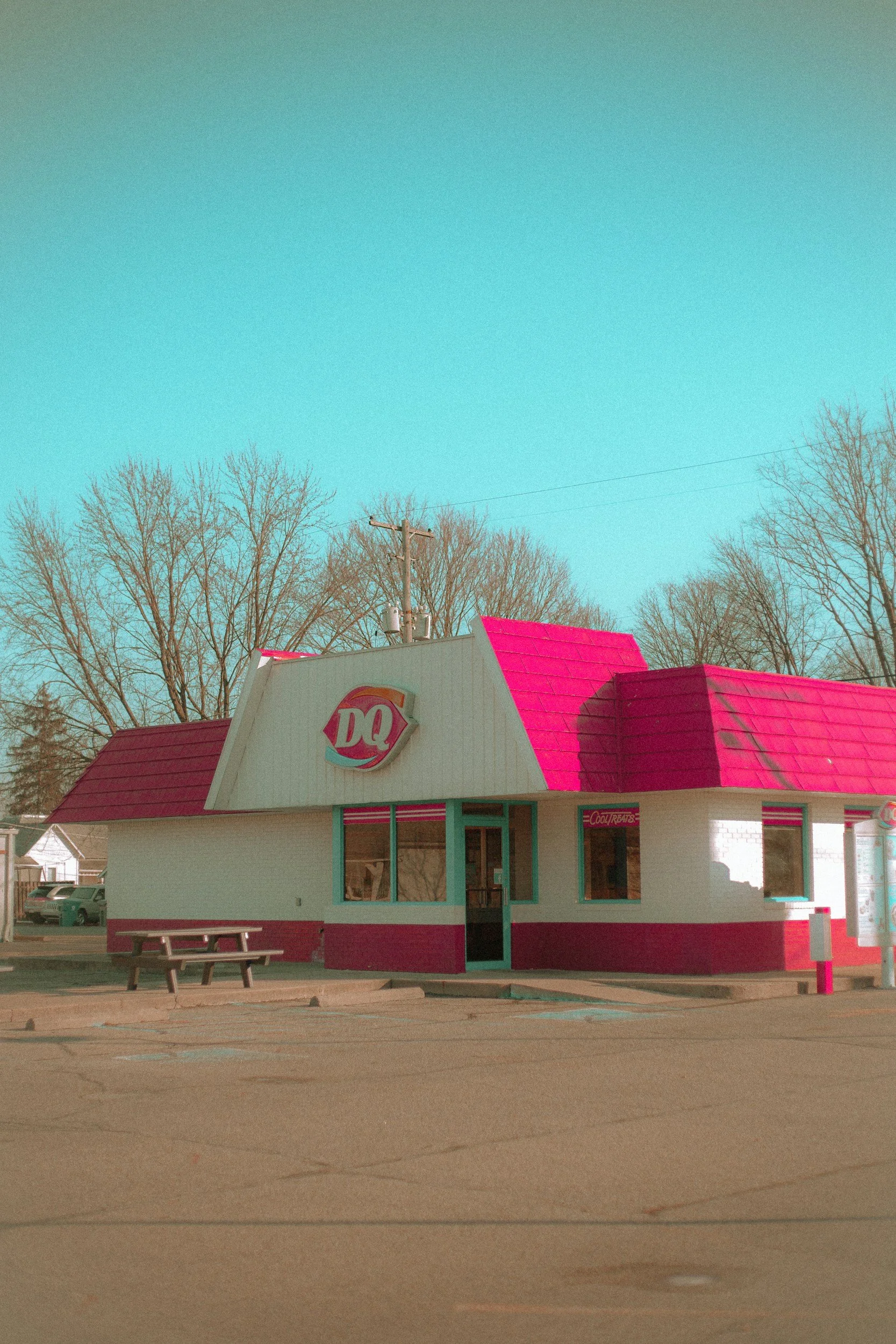
These are the details of the plan: it’s going to happen a week before finals, in the Dairy Queen parking lot, at twilight. Delilah goes every Thursday. She has a booth to herself. She stays there with a pile of textbooks perched to the left of her hand, until an hour before closing. If you drive slow on Main, you can see her there, glowing like the cloud she is, her eyes the softest part about her – the color of river rock when it’s wet, the kind that’s illegal to just take here, even though people do it all the time, jumping into the rushing water up to their waists and hauling out boulders the size of lambs, blood-slick.
The last Friday of the month, a guest speaker stands on the gym floor and clacks around and smooths her navy pencil skirt and says things like epidemic of bullying and state suicide rates and if you see something, say something.
The screen behind her shows images of fake happy kids doing fake happy things, like putting their arms around each other and running their hands through the shiny fur of a fake happy dog. The photos are overexposed, and the screen ripples in the breeze made by the gym fans, stretching out all those stupid grinning teeth.
At one point, the fish-eyed principal grabs the microphone from the guest speaker.
You know who you are, he says, solemnly. Today is the day that you choose kindness!
A titter sweeps the gym, and I crane to spot Delilah and instead spy Sam, her own neck craning away from a black-haired boy to her right. Her eyelids waggle. Her lower jaw sags. The boy’s hand is just above the knee of her corduroys, his face buried, briefly, in the crook of her collarbone.
Sam sees me. Something moves through her eyes. Surprise, maybe, the gleam of regret. But then she smiles, wider than the kids on the screen. She blows me a kiss. Kindness.
Dad asks why I’m angry and I shrug my shoulder blades together, bury my elbows deeper into the gray shag that both of us hate but Mom loved.
He turns the TV off. Episode eight’s salt and sand suck into the black center of the screen.
I look at my elbows and the million dots there left by the carpet, a red galaxy. Outside it’s almost real summer, the light shooting out long across the grass and heating the porch and making the rafters smell sharp and dry.
Dad leans forward, hands clasped, the way he did before he told me that Mom had died, sometime in the night, just like that, her yellowing face on the pillow collapsing into its fold like a sky gone wrong in a storm.
Haven’t seen Sam around, he says.
I shrug again.
Something happen with you two?
I look at my dad’s face, the way the folds of skin have pulled back into his bones in the last year, his eyes with their bluish glaze. He looks like he’s about to cry. He looks like he’s about to reach out, or at least like he wants to. Sam looked at me once like that.
It clips me, then, the thing I felt in the janitor closet.
Don’t know why you watch this stupid show anyways, I spit.
I stomp up to my room. He doesn’t follow. The TV eventually clicks back on. I hear the drone of ocean. I close my eyes and imagine a wave so big, so loud, our house doesn’t stand a chance. It just folds around us. It just takes us down without a fight.
I wake hot a few hours before dawn, moon spilling through the window and across the carpet, the stereo that Sam smashed with her fingers, the Dollar Store pen whose ink launched across my belly that one time.
Now, I let myself think all the way. This time, Delilah stands at the edge of the bed, illuminated by the moon. She smells like peaches just cut, swimming in their juice. Her hair glows.
Delilah, naked, is not held back. There are no bra straps or waistbands or buttons to keep her in. There are no teachers or students or bathroom stall doors. She flows out like the petunias scattering over their pot. I can see her tits, adult-looking, their nipples two hard dashes. She leans over me and they swing.
I reach. Delilah finds the slickness between my legs instantly, I don’t want it to be over right away but it is, a rocketing burst that kicks the comforter to the floor, and even then I keep going, imagining every part of Delilah that has probably already been imagined, imagine the feel of her hand. The taste of the corner of her eyes. Her sweat.
I find Sam with the black-haired boy by the junior lockers. She’s got her hand in the pocket of his hoodie, her back to the dull metal.
Hey!
She looks at me the first time but does nothing.
I said hey.
Sam smirks.
She puts a hand against the boy’s chest, lightly pushes, and he complies, patting Sam’s arm and sauntering off down the hall.
Have you heard about the plan? My voice is low and dangerous, like Heddie’s.
What plan.
The plan with Delilah.
Sam’s eyes roll. She thumbs beneath her lower lip, neatly bites the hanging flesh next to her nail. She’s dyed her hair auburn, which I hate. It was better when it was its original gray-brown, with its neat edge matching her jawline.
Maybe I’ll be there. And maybe I won’t be.
I reach for Sam’s waist. I run my index finger along the skin there, feel it soft and beating and warm like the inside of her palm.
Sam growls.
But she doesn’t swat my hand away. She lets it stay there. She just leans back and takes it, until the bell rings.
Sam shakes her head. I pull my finger back, roll it into my fist.
Oh, Tess, she murmurs.
She stalks down the hall, hunching forward. She pulls the hood of her sweatshirt up, covering all that red.
On Thursday, I feel nothing but a clean high hum that goes up and down my spine. It’s comforting, like the finger of God. It follows me around all day. It gets louder towards evening, when I yell to the living room that I’m going out with Sam and climb onto my bike and pedal into town.
The sky is lavender with no clouds. Sprinklers turn and leave no mist because there’s nothing to hang on in the air. People wave at me. I wave back. I smile. I feel like I’m on an episode of Survivor, playing the game just as I should be, playing it down to the bottom of the fucking sea. The Dairy Queen is unexpectedly busy, kids flooding in and out, ice cream dropping and spreading on the asphalt. I lean my bike against the brick wall, to the left of the dumpsters. I put my hands in my pockets and stare up at the fading light.
It doesn’t take long. The crowd dwindles. The traffic on Main builds and then eases. The tables empty. Before long, I can easily see the stack of books, the hand tapping there. The parking lot lights kick on. I look at my watch. It’s nearly time. The hum inside of me starts to go a little crazy. I breathe it in, lean against the bricks, pretend that I’m Sam. Sam when she’s mad. Sam when she’s happy. Sam when she’s good, and I’m good, and it’s the two of us being good together.
Sam when she’s Sam.
Someone approaches the dumpsters. I open my eyes, reach for the handlebars of my bike. Twilight has landed quickly, rolling out thick above. I see the edges of the books, hard, first. We both stop at the same time.
Delilah does float, this much I can see, and her skin looks soft and clear, like the edge of one long rose petal.
Delilah smiles. Her teeth are small and babyish. She has dimples. I imagine they were left there by someone who loved her, who pressed the tips of their fingers just so into Delilah’s cheeks as they were starting to form, filled her skin with so much tenderness that it had no choice but to stay like that.
I look around us, behind me. Nobody’s here. It’s just me and Delilah now. Like I’ve always wanted.
I think about all the things I want to say. One day, a long time from now, I will find a way to say these things. I’ll think about them when I’m biking home later under stars so hard I wait for the sky to crack, and when we move at the end of the summer to a place so far south with such heavy air washed constantly by streetlight that gravity feels different, but at least Dad’s sadness is, too, no longer a sadness that’s just trying to survive. I’ll think about it when I water the petunias we plant there, which go crazy, almost too crazy, it’s all we can do to keep them from overrunning the sidewalk.
I’ll think about it when I see Sam for the last time, across the street on a day so hot and dry there are town-wide warnings of spontaneous combustion. At any moment, things can just go up. Her hands are in her pockets, her eyes looking through me and beyond, as they always have. She gives me the smallest wave. A shy starting smile, the sun giving her a tender backlight. She looks like just a kid, and I am just a kid, before any of that other stuff came along.
I don’t wave back. I nod my head instead, a small downward arc of my chin. Then I turn around and go back into the house and shut the screen door. I count to twenty, then to forty. I go back out. By that point, she’s gone.
Delilah looks at me, waiting for what I’m going to say or do, like she’s the principal and I’m the student in her office. Delilah doesn’t seem like she has anywhere to be. She is just Delilah, and I am just Tess.
The sodium lights above the dumpsters flash on, washing us both with sharp amber, but you’d still have to work to see both of us – you’d have to want to see both of us, make a deliberate left-turn at the DQ and swing through the parking lot and all the way to the back and park just there.
Stay here, I murmur, and the words aren’t mine, they’re said in Sam’s voice, and Delilah listens.
I go inside the DQ, feel the icy hit of its AC, stride up to the counter and order four kid cones, chocolate vanilla twist. I plunge my fingers into my pockets as I wait. I scrape at the lint there. The lady behind the counter offers me a holder that I refuse – I carry all four cones in my hands, a melting bouquet.
Outside, Delilah is waiting, just as I commanded her, looking softer than she’s ever looked, and the crazy hum in me becomes one long jolt. My fist squeezes the cones in both of my hands so hard that ice cream floods out, running over my hands. Delilah’s mouth opens slightly. I throw the first cone.
It leaves an awful mark against her shirt, like a bruise. It lands just above her left breast, cuts a sad line from her collarbone to her top rib. She doesn’t flinch. Slowly, her eyes track to the spreading stain.
I throw the second cone, and then the third. I’m crying now, Delilah going all wobbly behind the salt, but still she doesn’t move, just stands there with her feet growing into the ground and taking it calmly, like a shore with an ocean wave knowing that this is just the way that it has to be for now, only some surviving, the rest getting sucked away.
I throw the fourth cone and miss. And then I run.
I pull my bike’s handlebars out of the jungle of shadows and knapweed behind the dumpsters and throw my legs over it. I ride hard, pressing the tip of the seat further between my thighs. I ride by the school with its hushed fluorescents and the sleeping track behind it, the weights room with its rows of steel and rubber and all of its mirrors. I ride by the 24/7 drug store and the alley behind the gymnastics place where I let Sam do it to me against a pile of mats. I ride by Sam’s house, which still has a single light on in the upstairs room, and I don’t stop even then. I ride until I’ve passed my neighborhood by at least a couple of miles, and it’s just barbed wire, and a couple of silent cows, and the moon hanging wide and free above. That’s when I let go, tipping the bike into a ditch and lying there. I stretch out my arms and float. Up and through and beyond. Like a cloud.
Kate Bird is a queer and genderqueer writer and multimedia artist who believes in the tender, the curious, the disruptive, and the sublime. Their fiction and nonfiction have appeared in Five Points, The Whitefish Review, Passages North, The North American Review, and elsewhere. They are a recipient of the 2021 Terry Tempest Williams Prize in Creative Nonfiction and a 2026 Creator in Residence with Anodyne Magazine.